25.10.2026
How to Choose an Ergonomic Office Chair: Expert Guide
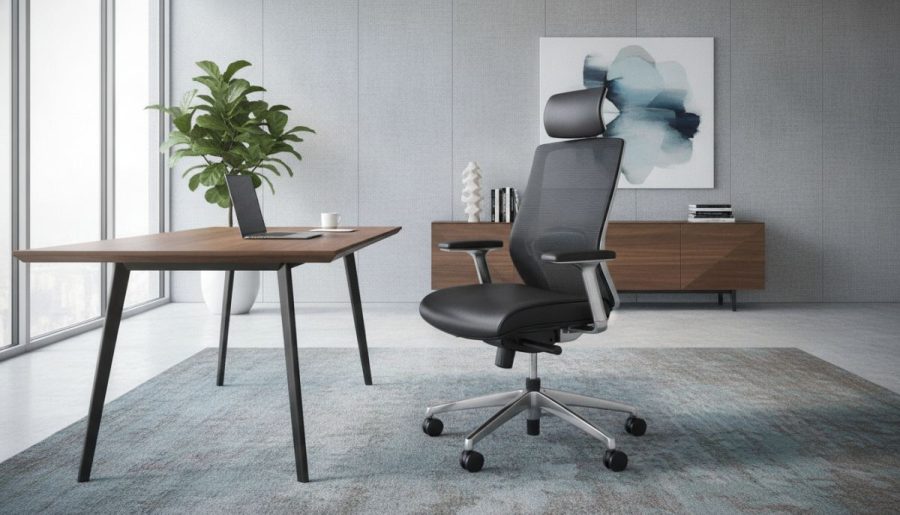
Selecting the right ergonomic office chair is a vital decision for safeguarding spinal health, preventing chronic postural strain, and maintaining high cognitive focus during demanding work hours. Unlike generic seating, an authentic ergonomic chair integrates customizable adjustment mechanisms that adapt precisely to the user's biomechanical profile. In corporate environments where employees spend prolonged periods seated at desks, passive seating is insufficient; workplaces require active, dynamic support systems that encourage micro-movements while preserving anatomical alignment.
Key Criteria for Selecting an Ergonomic Office Chair
The defining characteristic of an authentic ergonomic chair is its capacity for personal adaptation. Because human body dimensions, muscle distributions, and working styles vary significantly across individuals, rigid one-size-fits-all frames inevitably cause musculoskeletal discomfort. When evaluating models for individual or corporate procurement, several critical adjustment points must be assessed:
- Adjustable Lumbar Support: The human spine features a natural lordotic curve in the lower back forming an “S” shape. An effective lumbar mechanism must be adjustable in both height and depth to sit snugly into the inward curve of the lower back, reducing intra-discal pressure on the lumbar vertebrae.
- Pneumatic Seat Height Adjustment: Driven by a heavy-duty Class-3 or Class-4 gas lift cylinder, the seat height should allow the user's feet to rest completely flat on the floor with thighs parallel to the ground. This creates a balanced 90 to 100-degree knee bend, preventing blood pooling in the lower extremities while avoiding excess patellar compression caused by an excessively low posture.
- Seat Pan Depth (Seat Slider): The depth of the seating surface should be adjustable via a dedicated slider. A gap measuring roughly two to four finger-widths must remain between the back of the knees and the front waterfall edge of the cushion. This clearance prevents occlusion of the popliteal artery and maintains healthy blood circulation.
- Multi-Directional (2D/3D/4D) Armrests: Fixed armrests force users to conform their posture to rigid barriers. Multi-directional armrests allow height, forward-backward, width, and angular rotational adjustments. They should align level with the work surface to support forearms comfortably without elevating the shoulders, thereby alleviating strain across the trapezius and cervical musculature.
Achieving physiological balance requires synchronizing chair settings with desk configurations. To establish a coherent workspace layout, reviewing foundational ergonomic principles when selecting a desk ensures that work surfaces and seating operate in harmony.
Mechanism Types: Synchronous, Tilt, and Multiblock Systems
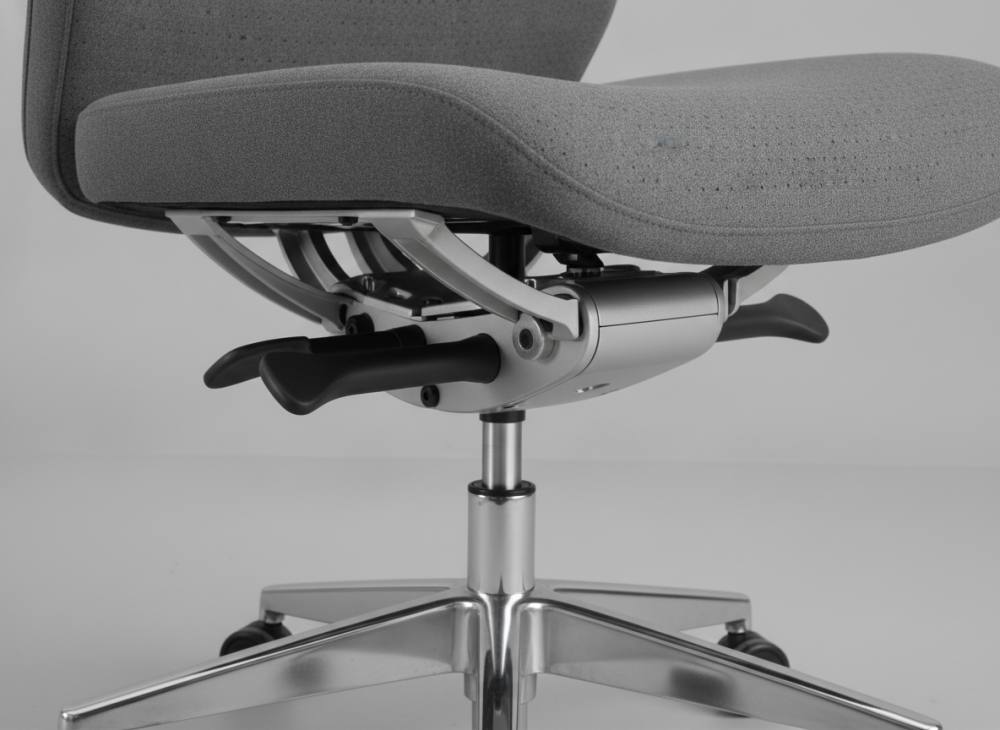
The mechanical core underneath the seat pan represents the functional heart of any ergonomic chair. The technical sophistication of this chassis dictates how smoothly the chair accompanies natural changes in body posture throughout the business day. Basic static brackets and primitive backrest-only recliners fail to relieve continuous spinal stress, making specialized mechanisms essential for active work routines.
The industry benchmark for dedicated desk work is the synchronous mechanism. In this configuration, reclining the backrest causes the seat pan to simultaneously tilt backward at a proportional ratio, typically 2:1. When leaning back to alleviate vertebral pressure, the front edge of the seat remains grounded, preventing feet from lifting off the floor and preserving optimal thigh circulation. The ability to lock this tilt angle across multiple positions or leave the chassis in continuous dynamic floating mode encourages regular posture shifts, mitigating muscular stiffness.
Multiblock mechanisms, commonly integrated into executive seating, accommodate deeper recline angles alongside stepped locking stages. These assemblies feature an adjustable tilt-tension dial underneath the chassis, allowing users to calibrate recline resistance against their body mass. Proper tensioning guarantees that a lighter user can recline without abdominal exertion, while a heavier user receives robust, progressive resistance that eliminates the sensation of tipping backward abruptly.
Material Selection and Breathability: Mesh, Fabric, or Leather?
Upholstery textiles and structural cushioning heavily dictate both thermal comfort and long-term durability. Given daily use spanning thousands of hours, careful material specification is necessary to prevent premature foam sagging, heat retention, and fabric wear.
Mesh backrests provide exceptional air circulation, actively dispelling body heat in warmer office climates. High-grade elastomeric mesh self-adjusts across the thoracic profile, dispersing contact pressure without rigid pressure points. However, the mesh must consist of industrial-grade synthetic yarns that retain tensile memory over years of usage without sagging or stretching out of form.
Fabric-upholstered molded foams deliver stable, cushioned support across the seat pan. The internal cushion should feature high-density, cold-cured polyurethane foam (optimally 50 to 60 kg/m³ density). Cold-cure molded foam retains its elastic resiliency far longer than cheap cut sponge, ensuring the seat maintains its contour. Additionally, a downward-sloping waterfall front edge relieves contact pressure beneath the distal thighs.
Genuine and synthetic leather finishes excel in executive suites and conference settings where refined prestige and visual gravitas are paramount. Premium leather chairs must combine supple tactile finishes with anatomically shaped internal cold-cure foam cores to provide adequate ergonomic support alongside their distinguished appearance. To browse models engineered for long-term daily desk tasks, explore technical alternatives within our task chairs portfolio.
Ergonomic Chair Comparison by Intended Use
Different workplace roles demand distinct ergonomic characteristics. A software engineer, financial analyst, or administrative specialist operating continuously at a computer requires intensive postural adjustability, while an executive chair balances high-level ergonomic support with stately architectural presence. The qualitative matrix below details these practical distinctions:
| Evaluation Factor | Operational Task Chair | Executive Management Chair | Verification Method |
|---|---|---|---|
| Typical Seating Pattern | Continuous, focused screen-based operations | Intermittent seating, executive meetings, analysis | Daily departmental workflow assessment |
| Back and Head Support | Breathable technical mesh, adjustable headrest | High-profile padded back, integrated neck support | Contact contour and thoracic alignment check |
| Chassis Mechanism | Advanced synchronous dynamic mechanism | Multiblock recline with multi-stage locking | Tilt range and resistance tension calibration |
| Armrest Customization | 3D or 4D multi-directional adjustment | Fixed architectural or 2D padded armrests | Clearance evaluation against desk tops |
For corporate suites seeking to marry anatomical support with prestigious executive design, examine specialized models within our collection of executive chairs.
Common Mistakes When Buying an Office Chair
During commercial procurement and home office outfitting, purchasers frequently allow cosmetic appeal to overshadow technical functionality. This oversight often results in elevated ergonomic fatigue and early replacement cycles. Key errors to avoid include:
- Equating Visual Plushness with Comfort: Overly thick, soft cushions initially feel inviting, but they allow the pelvis to rotate backward, flattening the lumbar curve. Healthy ergonomic seating relies on firm, supportive contouring rather than plush, unsupportive padding.
- Selecting Fixed Chassis Frames: Stationary chairs lacking recline mechanisms freeze the body into rigid static postures. Static sitting restricts intervertebral fluid exchange and accelerates muscular fatigue over an eight-hour shift.
- Disregarding Desk Top Compatibility: Buying chairs with non-adjustable, high armrests prevents the chair from sliding beneath the desk. This forces the user to sit forward on the edge of the seat, disengaging from the backrest and inducing upper-body slouching.
- Ignoring Caster and Base Specifications: Utilizing hard plastic casters on parquet or tile surfaces creates slippage and damages flooring, while soft-tread polyurethane casters run smoothly and quietly across delicate hard floors.
Developing a productive and unified work environment requires evaluating seating in tandem with the entire spatial framework. Explore comprehensive recommendations on selecting corporate office furniture to align durability, layout efficiency, and corporate aesthetic goals.
Frequently Asked Questions About Ergonomic Office Chairs
What is the recommended backrest angle for desk work?
During active computer operations, an upright posture with a backrest angle between 90 and 100 degrees supports visual focus and keyboard alignment. During telephone conversations, reading, or brief pauses, releasing the mechanism to a 110 to 120-degree recline effectively offloads spinal discs and relaxes back muscles.
Are mesh chairs more durable than upholstered foam chairs?
Durability depends entirely on manufacturing grade rather than style alone. Cold-cured polyurethane foams retain structural density for years, whereas standard low-density sponge flattens quickly. High-tensile technical mesh with elastomeric threading provides excellent longevity without sagging, making a mesh back paired with a molded foam seat a popular hybrid solution.
Why are multi-directional armrests important?
Multi-directional armrests ensure that forearms rest comfortably at the exact plane of the work surface. By transferring the weight of the arms away from the shoulder girdle, they relieve strain on the cervical spine and help prevent repetitive wrist extension, reducing cumulative stress on the median nerve.
Where should the lumbar support pad be positioned?
The lumbar pad should fit directly into the small of the lower back, aligning with the lordotic arch just above the beltline. Positioned too high, it pushes the mid-thoracic spine forward; positioned too low, it presses uncomfortably against the sacrum without supporting the lumbar vertebrae.
Enhancing Your Workspace with Professional Seating Solutions
Investing in verified ergonomic seating is a proven strategy for protecting employee wellbeing, reducing physical fatigue, and reinforcing daily organizational performance. Whether designing modern open-plan operational floors or configuring high-profile executive offices, matching mechanical capabilities with individual anatomical needs guarantees long-term workplace satisfaction. To examine technical specifications, review upholstery configurations, or discuss turnkey furniture procurement for your upcoming commercial project, please contact us to consult directly with our office planning specialists.