02.11.2026
Wood vs Metal vs Lacquer in Modern Office Furniture
When specifying and procuring furniture for commercial workspaces, selecting the right surface material is the single most defining factor for day-to-day durability, acoustic comfort, and long-term brand prestige. When evaluating office furniture, facility planners, interior architects, and corporate executives must balance visual appeal with daily maintenance, lifecycle resilience, and operational budget considerations. Every commercial zone carries distinct demands: an executive suite requires an atmosphere of authority and calm, whereas an open-plan layout faces non-stop foot traffic and physical wear. Wood surfaces provide timeless warmth and acoustic softening; metal components deliver high mechanical strength and clean architectural profiles; lacquer introduces seamless finishes and custom corporate colorways. In this guide, we evaluate the distinct characteristics of wood, metal, and lacquer surfaces to help you build functional, enduring corporate environments.
Natural Warmth and Prestige: Wood Veneer and Solid Surfaces
Natural wood veneers and solid timbers represent tradition, executive authority, and tactile authenticity in workplace design. Typically produced by bonding high-grade natural veneers—such as walnut, oak, ebony, or teak—over engineered substrate panels under calibrated heat and pressure, wood furniture carries unique grain configurations that ensure no two executive desks are identical. This inherent organic variation provides a comforting, grounded counterweight to glass-heavy architectural spaces.
Beyond visual impressions, natural wood offers superior acoustic performance compared to hard synthetic surfaces. Rather than reflecting sound waves directly back into the room, wood grain gently diffuses ambient noise, helping control reverberation in large corporate suites, boardrooms, and private interview spaces. However, natural wood demands careful environmental management. Direct exposure to unfiltered ultraviolet radiation can cause gradual surface discoloration, while sharp swings in indoor humidity can stress joints or micro-finishes. Placing hot mugs or uninsulated carafes directly on finished wood can mark delicate sealants, making dedicated coasters and periodic protective oiling or re-lacquering essential practices.
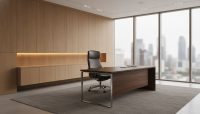
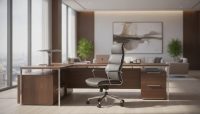
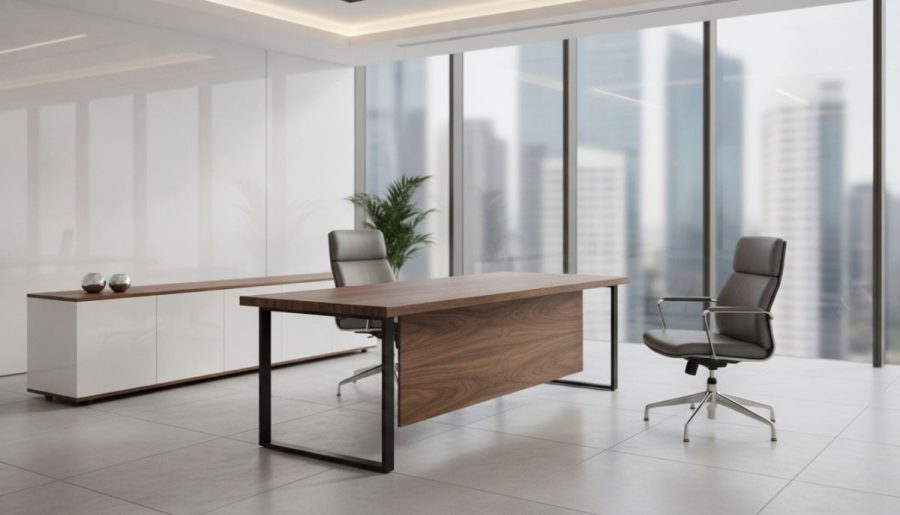
For organizations seeking a classic sense of leadership blended with contemporary ergonomics, an authentic wood-finished executive office suite remains a dependable anchor. Pairing rich timber tones with neutral leather seating and understated stone accents creates an authoritative, focused ambiance suitable for strategic decision-making.
Industrial Strength and Structural Dynamism: Metal Finishes
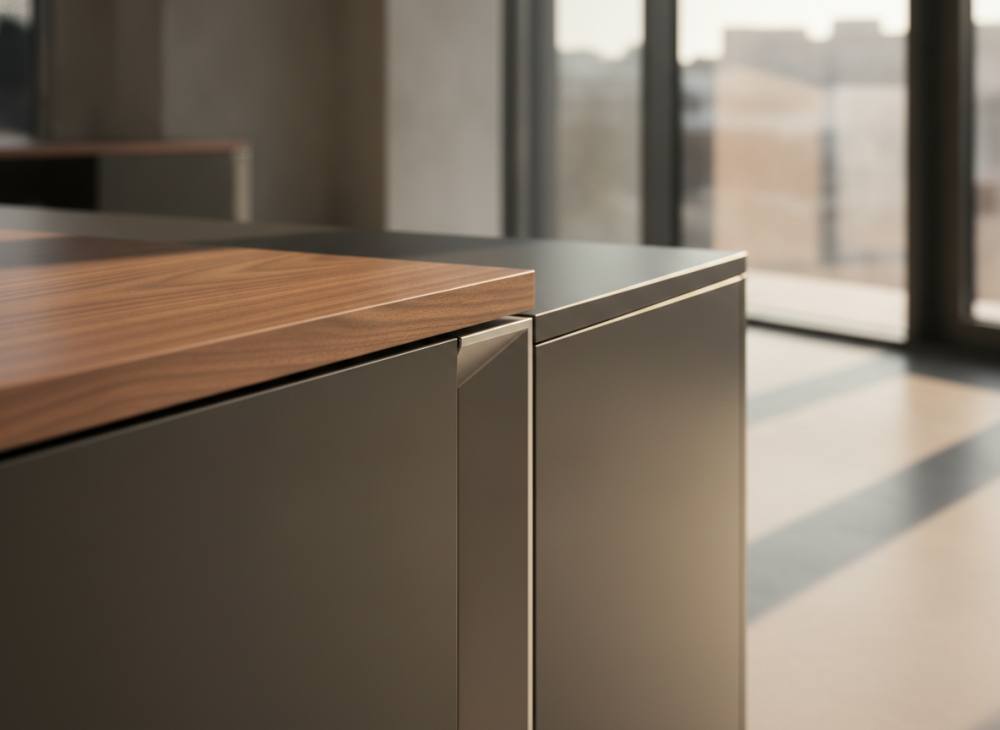
In modern corporate interiors, metal is no longer confined to hidden internal frames; it serves as a central aesthetic and functional surface material. Steel, architectural aluminum, and cast alloys treated with electrostatic powder coatings, anodizing, or electroplated chrome finishes deliver high structural integrity, exceptional impact tolerance, and resistance to heavy daily abrasion. For collaborative floor plans and high-density operational departments, metal understructures preserve their structural alignment without warping, wobbling, or edge fatigue over decades of continuous use.
Metal surfaces excel in ease of sanitization and routine upkeep. They are non-porous and largely unaffected by accidental coffee spills, routine corporate cleaning chemicals, and incidental scuffs from mobile task chairs. Structurally, the high tensile strength of metal allows designers to engineer ultra-thin profiles, cantilevered returns, and open framework designs that maintain spacious sightlines across expansive corporate floors. While unadorned metal can feel visually cool, pairing powder-coated frames with fabric acoustic screens and warm tabletop laminates creates a balanced, inviting workplace.
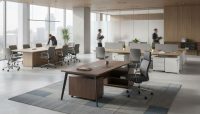
In rapid-growth environments where operational teams require clean integration for power, data cabling, and multi-monitor arms, metal-framed workstation desks offer the necessary structural rigidity. Integrated steel cable troughs, modesty covers, and magnetic access plates make metal the practical foundation for agile commercial setups, creative studios, and technology headquarters.
Flawless Continuity and Modern Elegance: Lacquer Surfaces
Lacquer finishes are achieved by applying multiple layers of polyurethane or acrylic-based paints over precision-sanded high-density fiberboard (HDF/MDF), followed by controlled drying, oven-baking, and careful polishing. Available in ultra-matte, silk-matte, and high-gloss variants, lacquer delivers a monolithic, uninterrupted appearance completely free from visible edge bands or seam lines. This uninterrupted surface geometry creates an exceptionally polished, architectural aesthetic tailored to high-end contemporary offices.
A key commercial advantage of lacquer is chromatic flexibility. Unlike natural woods that depend on natural species and stains, lacquer can be matched to precise corporate identity color standards across RAL or NCS palettes. High-gloss lacquer surfaces reflect natural daylight, brightening interior rooms and compact executive lounges, whereas silk-matte finishes provide glare-free, fingerprint-resistant tactility. Nonetheless, lacquer finishes demand conscious care in active settings; direct impacts from heavy desktop objects, sharp staplers, or metal-edged laptop bags can chip brittle topcoats, making spot repairs more technically demanding than refinishing wood.
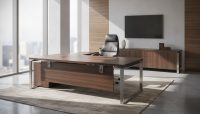
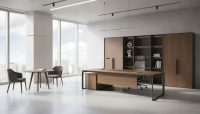
For prestigious boardroom spaces and C-level environments where refined distinction is paramount, specialized VIP executive office sets often merge silk-matte lacquer with natural veneer panels and polished metal reveals. This composite design creates a sophisticated visual hierarchy, anchoring executive authority in monochrome palettes of graphite, warm stone, and deep anthracite.
Surface Material Comparison Matrix
Selecting the ideal surface depends on expected operational traffic, cleaning protocols, light exposure, and overarching design goals. The following structured matrix outlines how natural wood veneer, powder-coated metal, and polyurethane lacquer perform across standard corporate procurement criteria.
| Evaluation Criterion | Natural Wood Veneer | Metal (Powder-Coated / Anodized) | Lacquer (Polyurethane / Acrylic) |
|---|---|---|---|
| Impact and Scratch Resistance | Moderate; minor marks blend with grain, deep abrasions need touch-ups. | Very High; resists structural denting, chipping, and heavy wear. | Moderate; susceptible to micro-scratches and edge chipping from sharp objects. |
| Moisture and Chemical Tolerance | Sensitive; unsealed exposure can lead to swelling or water marks. | Very High; impervious to moisture, spills, and standard sanitizers. | High; non-porous barrier resists liquid penetration when intact. |
| Maintenance Effort | Requires specialized non-abrasive cleaners and occasional conditioning. | Minimal; wipes clean with standard microfiber cloths and mild solutions. | Gentle care; requires non-abrasive cloths to prevent surface swirl marks. |
| Acoustic Comfort | Softening; naturally diffuses high frequencies and dampens chatter. | Reflective; best paired with integrated sound-absorbing desk dividers. | Reflective; smooth surface bounces direct sound waves across the room. |
| Spatial Impression | Warm, authoritative, grounded, and heritage-focused. | Industrial, agile, light, and architectural. | Minimalist, seamless, bespoke, and modern. |
Note: For precise workplace performance evaluations, site audits and facility telemetry should be referenced; no theoretical metrics are assumed here. Material behaviors reflect established commercial processing guidelines and industry interior design practices.
Strategic Material Placement Across Office Zones
Specifying a single uniform material across an entire commercial floor plate often results in visual fatigue and suboptimal budget utilization. Allocating specific surface treatments according to the functional demands of each operational zone creates a cohesive, durable interior:
- Executive and Boardroom Suites: A thoughtful pairing of matte lacquer and natural timber veneer maintains formal executive prestige while preserving clean contemporary design lines. When evaluating whether to choose an authentic wood executive suite or a modern contemporary desk, hybrid compositions that blend dark walnut with structured matte lacquer modesty panels provide the optimal bridge between heritage and innovation.
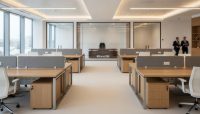
- Open Operational Zones: High-density collaborative desks should leverage heavy-gauge steel or aluminum leg structures with durable, impact-resistant horizontal tops. Metal legs withstand scuffs from maintenance machinery and desk chairs, preserving furniture aesthetics over heavy turnover cycles.
- Conference and Client Presentation Rooms: Avoid high-gloss surfaces in presentation spaces equipped with overhead lighting and digital display screens. Silk-matte lacquer or open-pore wood surfaces eliminate distracting light glare, enabling uninterrupted focus during long client meetings.
- Reception Desks and Welcome Lounges: As the primary touchpoint for visiting partners and clients, reception counters benefit from seamless lacquer modules customized to match brand guidelines, reinforced by brushed metal kickplates that guard against accidental shoe contact.
Common Specification Mistakes to Avoid
A frequent error during commercial fit-out projects is approving surface finishes based solely on small material swatches viewed under showroom lighting. For instance, placing deep black, high-gloss lacquer desks directly beneath south-facing architectural windows creates severe daylight reflection, accelerating eye fatigue for computer users while highlighting every fingerprint and dust particle.
Another common misstep is deploying delicate, hand-rubbed timber finishes in busy team consultation areas or communal break lounges without adequate polyurethane sealing. Daily coffee condensation rings, disinfectant sprays, and unbuffered friction from laptops will rapidly wear through thin finishes, generating premature refinishing costs. Similarly, opting for thin-gauge metal profiles without durable powder coating or anti-corrosion pretreatments can lead to peeling paint and structural vibration during daily keyboard use.
Frequently Asked Questions
How do wood veneer and lacquer desks differ in long-term wear?
Natural wood veneer contains organic grain lines that visually camouflage light surface scratches, and minor surface imperfections can often be re-polished or treated with furniture wax. Lacquer provides a completely non-porous, moisture-resistant barrier against fluid spills, but sharp physical impacts can crack or chip the outer paint layer, requiring specialized spray-touchup techniques to restore the seamless finish.
Can metal office furniture legs cause damage to hard commercial flooring?
Commercial-grade metal furniture systems utilize heavy-duty polymer, rubber, or self-leveling polyethylene glides at all floor contact points. These protective feet prevent scratches on timber, concrete, and luxury vinyl tile (LVT), while allowing facility teams to compensate for uneven screeds and floor transitions.
Which lacquer finish is more practical for everyday office desks: matte or high-gloss?
Silk-matte or deep-matte lacquer is substantially more practical for primary task desks. High-gloss finishes reflect overhead luminaires and ambient window light, contributing to visual glare and showing oils from hands more readily. Matte lacquer scatters incoming light gently, providing a uniform, calming tactile experience during extended work hours.
How should natural wood executive furniture be cleaned and maintained?
Natural timber desks should be placed away from direct convective airflow paths, such as heating radiators or high-velocity air-conditioning diffusers. For regular cleaning, wipe with a slightly damp microfiber towel following the direction of the wood grain, avoiding ammonia-based household degreasers. Treating surfaces with appropriate furniture-grade wood care balms helps prevent dry micro-checking.
Optimizing Your Workspace Material Strategy
Selecting corporate furniture materials is a foundational architectural decision that impacts how your brand is perceived and how comfortably your workforce operates. By evaluating natural light exposure, department traffic patterns, and technology cabling needs, you can deploy wood, metal, and lacquer surfaces where their distinct physical properties deliver the highest value. For specialized layout planning, custom surface engineering, and comprehensive commercial furniture proposals tailored to your facility, contact our team to start your workplace project.